Jack's master-servant and lifesaving bond with Old Ben
Young Captain Jack · The Son of a SoldierJack's master-servant and lifesaving bond with Old Ben is the novel's clearest example of a relationship whose moral substance exceeds its social label. Old Ben is introduced as a formerly enslaved man still attached to the Ruthven household, while Jack is regarded by hostile figures as an “ocean waif” and a person of uncertain birth. Yet the relationship repeatedly reverses the expected direction of dependence: although Old Ben calls Jack his young master, he is also Jack's provider, rescuer, protector, and comrade in resistance. Their loyalty survives emancipation, wartime division, imprisonment, and the revelations that repeatedly unsettle Jack's identity.
Service, Affection, and Jack's Uncertain Status
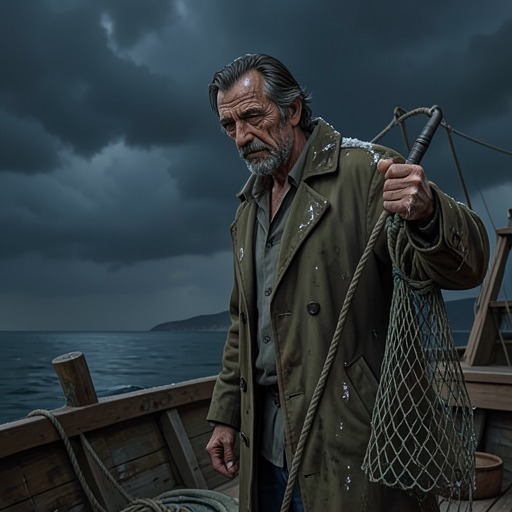
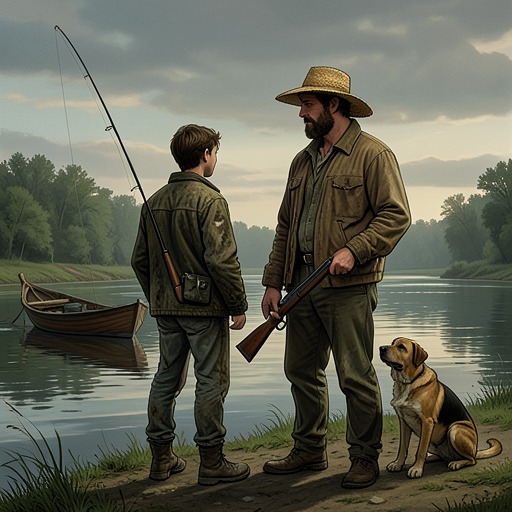
Old Ben's connection with Jack is rooted in the Ruthven plantation but is not reduced to ownership or obedience. After seeing Jack row toward the wreck and fail to return, Old Ben assumes that the boy is stranded and without food. He crosses the water in the rain with a basket of provisions from the plantation, arriving soaked while still thinking first of Jack's practical needs. Marion recognizes this care with affection, and the narrative explains that Old Ben had been a privileged figure on the Ruthven plantation; freedom has not ended his attachment to his former mistress and her children.
The bond also gives Old Ben a voice against the class and birth prejudice directed at Jack. When St. John Ruthven dismisses Jack as an ocean waif of probably low birth, Old Ben indignantly insists that Jack is a young gentleman and that his father was one as well. His defense is instinctive rather than legally proven, but it matters because it refuses to let uncertain origins determine Jack's human worth. At a time when Jack is shaken by the claim that he is nobody and does not belong to the Ruthven family, Old Ben's confidence supplies an alternative judgment based on character, conduct, and the dignity he sees in the boy.
Mutual Rescue in Moments of Danger
Their relationship becomes most explicit through physical rescue. During the struggle in the water, Jack reaches St. John Ruthven and tries to save him even after St. John, panicked, clutches Jack around the throat and places both of them in greater danger. Jack orders him to take hold of his shoulder, forces him away when he will not loosen his grip, and then supports him while treading water. Old Ben's later conduct gives this same ethic of rescue a reciprocal form: Jack is not merely someone he serves but someone whose life he will actively defend.
That protective role culminates when a wildcat prepares to spring upon Jack in the mountain cabin. Columbus Washington fires, and Old Ben immediately appears at the doorway, checks the animal with his gun, and crushes its skull to make certain it is dead. Jack responds with unreserved joy and declares that Ben has saved his life. The scene compresses their bond into a decisive exchange: Old Ben's loyalty is not ornamental plantation affection but a capacity for timely violence, judgment, and courage when Jack is helpless.
Loyalty During War and Captivity
Old Ben's loyalty remains firm as the Civil War reorganizes the loyalties around the Ruthven plantation. He questions Harry Powell about whether he has joined the Yankees, and Harry answers that he is fighting for the old flag. Old Ben understands that this decision will distress Mrs. Ruthven and Marion, but his own allegiance is shown through action rather than political argument. When Jack is endangered, Old Ben acts as his ally regardless of the military and social pressures surrounding them.
After Jack is released from the lonely mountain cabin, Old Ben travels with him and Columbus Washington across the country toward the Ruthven plantation. He tells Jack that Mrs. Ruthven has been desperately worried about his absence, while Jack vows that he will prevent his captors from taking him again. The return is therefore both geographical and relational: Old Ben helps restore Jack to the household that has raised him, even while Jack's legal and biological identity remains unsettled.
Dr. Mackey recognizes the strength of this allegiance when he accuses Old Ben and Columbus Washington of helping Jack escape. Old Ben does not deny it. He answers that Jack is his young master and asks why he should not try to save him. The statement preserves the old vocabulary of service, but its dramatic meaning has changed. Old Ben invokes “master” as a chosen relation of loyalty, not as proof that Jack possesses him. His conduct makes clear that affection and moral commitment, rather than coercion, govern the bond.
Resistance Against Dr. Mackey
Old Ben's relationship with Jack also becomes a partnership against Dr. Mackey's conspiracy. While the two are prisoners, Old Ben calls the surgeon the worst rascal he has ever seen and regrets that Dr. Mackey was not killed in the first battle he entered. Jack tells him that the surgeon wants to take them both out of South Carolina, revealing that their danger is shared. Old Ben's response is not passive sympathy; he remains alert to the threat and prepared to act.
When an opportunity arises, Jack quietly tells Old Ben that they must make the surgeon a prisoner. Old Ben immediately agrees and offers to do his share. Jack plans to jump onto Dr. Mackey's back while Ben follows with the gun, turning the former master-servant arrangement into coordinated tactical action. Jack supplies the initiative, but the plan depends on Old Ben's readiness, weapon, and trust. Their shared resistance helps convert captivity into an opening for agency.
The same loyalty continues after Dr. Mackey is brought back to the Ruthven home. Mrs. Ruthven orders Old Ben to ensure that the surgeon does not escape before she speaks privately with Jack. Old Ben answers that Dr. Mackey will not get away from him. His promise places him at the threshold between domestic protection and armed custody: he guards Jack, the household, and the truth that Dr. Mackey has tried to control.
Identity, Recognition, and Moral Significance
Old Ben's bond with Jack is especially important because Jack's identity changes through competing stories. He is first treated as an outsider rescued from the wreck, then recognized by Marion as an adopted brother, claimed by Dr. Mackey as a son, and finally identified as Colonel Stanton's son. The wreck, the unmarked clothing, the lace handkerchief, and the worn ring preserve fragments of a past that no one can initially explain. Old Ben belongs to the earliest history of that mystery: he is identified as the man who saved Jack when the shipwreck occurred, and he remains a living witness to the boy's arrival in the Ruthven world.
His testimony is not presented as a complete genealogy, yet it has a distinctive authority. Old Ben cannot name Jack's parents or decode the worn inscription on the ring, but he recognizes the boy's worth before official proof is available. He also acts on that recognition, bringing food, defending Jack against St. John Ruthven's contempt, saving him from the wildcat, aiding his escape, and joining the attempt to imprison Dr. Mackey. In this pattern, service becomes guardianship and guardianship becomes resistance.
The relationship therefore exposes the inadequacy of social rank as a measure of moral value. Old Ben is repeatedly represented through a racialized dialect and an inherited language of plantation hierarchy, but the concrete events give him practical knowledge, courage, loyalty, and decisive power. Jack, meanwhile, may be called a young master, an adopted brother, a nobody, or the son of Colonel Stanton; the labels change, while Old Ben's conduct remains consistent. Their bond gives the novel a durable ethical center: before bloodline is proved and before Jack's public identity is settled, he is already claimed by the person who has repeatedly fed him, saved him, defended him, and stood beside him at the point of greatest danger.